Carbon-Ukraine - Equipment Manufacturing
Sorbent Properties
Purity
HydrophobU is a carbonaceous sorbent with a purity of over 99.9%. It has negligible sulfur content, and metal impurities can be reduced to levels below 100 ppm, if desired. The high purity ensures efficient release/desorption of analytes of interest. HydrophobU has almost zero ash content and burns completely in air at 650oC.
| Carbon | greater than 99 wt.% |
| Metals | less than 100 ppm |
| Halogens | less than 100 ppm |
| Other elements | less than 10 ppm |
Thermal stability
HydrophobU offers excellent thermal stability with a service temperature of up to 400oC. The higher service temperature of HydrophobU compared to conventional sorbents allows analytes to be released over a shorter timescale, for improved peak shape and resolution. Furthermore, rapid release of analytes allows the use of a low flow rate of the carrier gas. In addition, HydrophobU has high particle endurance (low friability), ensuring a long service life in applications where it is subject to mechanical wear.
Hydrophobicity
In many trace analytical applications, moisture sorption limits the choice of sorbent used. When atmospheric moisture binds to the sorbent surface, it blocks the sorption of analytes of interest, i.e. volatile and semi-volatile organic compounds (VOCs and SVOCs). In contrast to other porous carbon sorbents, HydrophobU is highly hydrophobic while maintaining the ability to adsorb and release a wide or narrow range of VOCs depending on the specific material chosen. The figure on the right shows the moisture sorption of the sorbent material. The material only adsorbs 20 wt.% of water after extended exposure to high relative humidity conditions (70%).
Friability refers to the ease with which a solid substance can be broken up into smaller particles. Most carbon-based sorbents are extremely friable. This means that one must take great care when packing and hauling these sorbents. By contrast, HydrophobU has low friability, i.e. good mechanical integrity. This directly translates to improved anti-clogging properties. HydrophobU does not leave any fines behind when it is placed onto and then removed from a sheet of paper, in contrast to the activated carbon sorbents which leave behind a fine powder, darkening the paper.
FAQ
Activated carbon is referred to porous carbon that undergoes through a process called activation. Activation process involves high temperature treating of already pyrolyzed carbon (often referred as char) using so called activating agents such as carbon dioxide, steam, potassium hydroxide, etc. Activated carbon has great adsorption capabilities for which it is used in liquid or vapor phase filtration media. Activated carbon has surface area greater than 1,000 m2/g.
Use of activated carbon has been known for many centuries. In 1550BC, an Egyptian Papyrus referred to its use in medicinal treatment for food poisoning. In 1813 French chemist M. Bertrand swallowed a lethal dose of arsenic mixed with activated carbon and survived. In 1831, in an event organized by the French Academy of Medicine, Prof. Touery swallowed a lethal dose of strychnine mixed with activated carbon and survived. Ever since, activated charcoal has been used increasingly in hospitals around the world for poisoning.
Yes. Activated carbon is the treatment of choice worldwide for most emergency care poisoning and drug overdose patients. It is considered to be the most effective single agent available. It is used after a person swallows or absorbs almost any toxic drug or chemical.
Conventional activated carbons are prepared from a range of carbonaceous materials like wood, coal, coconut shells, etc. The raw material is converted in to char by a process called pyrolysis and activated by agents such as carbon dioxide, steam, potassium hydroxide, etc. This multi-step process introduces impurities in the final product. As a result, not all activated carbons are safe for medical use. The activated carbon is usually purified by washing in acid solutions. USP (U. S. Pharmacopoeia) certification is required to qualify activated carbon as medical grade carbon.
The EnterosorbU technology allows us to tune the properties of carbon sorbent for specific applications. The conventional activated carbon manufacturing processes allow little control over the pore structure. Most pores in activated carbons are micropores, i.e. below 2 nm, which limits their performance in many applications, including adsorption of large biomolecules. This is because in microporous carbon only surface adsorption takes place, whereas, EnterosorbU which is mesoporous, the adsorption takes place in the entire bulk of the carbon. Our technology enables us not only to tune the physical but also the surface properties of carbon. EnterosorbU can be manufactured with various degrees of surface hydrophilicity or hydrophobicity and can be further functionalized to provide the most efficient surface conditions for adsorption of specific molecules. EnterosorbU can also be produced in a bactericidal form.
Hemofiltration, enterosorbent, wound healing bandages, drug overdose and poisoning treatment.
Sepsis is a medical term for blood poisoning by an infectious agent. This causes the body to produce an array of biologically and immunologically active molecules called cytokines, which play a major role in causing life threatening systemic inflammatory response syndrome (SIRS) and subsequent Multiple Organ Dysfunction Syndrome (MODS). Laboratory data and clinical observations support the concept that these molecules participate in the pathogenesis of organ injury and that their blood levels correlate with the severity of illness and outcome. Sepsis kills around 500,000 annually. It is the 10th leading cause of death in the United States. There are more than 1,000,000 cases of sepsis each year in the U.S., with mortality rate of approximately 20%. Sepsis accounts for nearly $17 billion and €5.8-7.6 billion in annual healthcare expenditures in the United States and in Europe, respectively. Annually 18 million cases of severe sepsis occur worldwide, killing 1400 patients each day. The incidence of sepsis is expected to further increase by 1.5% every year, resulting in an additional 1 million cases per year by 2020.
Hemoadsorption’s benefits over existing sepsis and autoimmune treatments include lower cost, more efficient and effective treatment, and improved patient comfort during and after the treatments. Unlike dialysis, filtration, and drug-based therapy, hemoadsorption can remove toxins without introducing any other substances into the blood.
EnterosorbU is currently available for research and development purposes only. Please contact us at sales@carbon.org.ua or call us for additional information.
Our technology allows us to manufacture EnterosorbU with properties optimized for adsorption of specific molecule(s). We have the sorbents specifically developed for hemofiltration and enterosorbent application. Please contact us at sales@carbon.org.ua or call us for further information. We believe that the specific carbon that we develop for you will be complaint to Codex standard. Once you test and it peforms to your need, we can get the specific carbon certified as medical grade (as per Codex standard) within 2-4 weeks.
Custom products
We can develop custom based activated carbon for food, water and air applications. We have the capabilities of acid washing and treating with different chemicals. We have capabilities for halogen purification of various carbon and non-carbon products such as graphite, synthetic diamond, activated carbon, silica, zirconia, etc. We supply various grades of impregnated activated carbon such as potassium hydroxide, sodium hydroxide, potassium iodide, sulfur, potassium permanganate, silver, and palladium. For quote and additional information on our custom products, please, conact us.
Hemosorbent
Hemosorbent
EnterosorbU for hemosorbent applications is specifically designed to adsorb inflammatory mediators and cytokines to treat sepsis, a disease resulting from the body’s inflammatory response to severe infection. Sepsis affects over 20 million people worldwide each year and kills around 500,000 of them. EnterosorbU intended for sepsis is mesoporous in nature with slit-like open pore structure enabling the adsorption of cytokines to occur throughout the bulk of the material. It has a particle size of 100 microns, pore size of 5-10 nm, pore volume of over 1.0 cm3/g and a surface area over 1000 m2/g.
EnterosorbU is available in the bulk form that can be packed in hemofiltration cartridges used for extracorporeal organ assist devices.
Additionally, we have the capability of tuning the properties of EnterosorbU for the adsorption of specific biomolecules. If you need help in selecting the right sorbent for adsorption of specific molecule then please write us.
Cytokine adsorption
Severe and uncontrolled microbial infection often results in septicemia, causing septic shock and subsequent organ failure. This process leads to death from kidney and liver failure. Presence of growing amounts of various inflammatory mediators (cytokines) leads to sepsis. We performed the adsorption of 42 cytokines for 5, 30 and 60 minutes on one of our carbons. The results of the adsorption test is shown below.
Method
Fresh frozen human plasma was defrosted and spiked with a standard cytokine solution containing 42 cytokines at concentration of about 1000 pg/ml. Carbon adsorbents (0.02 g, particle size: 40/60 mesh) were equilibrated in phosphate-buffered saline (PBS) (0.5 ml) overnight prior to removal of PBS and addition of 800 ml of spiked human plasma. Controls consisted of spiked and un-spiked plasma with no adsorbent present. The samples were incubated at 37oC while shaking (90 rpm). After 5, 30 and 60 minutes of exposure times, the samples were centrifuged, and the 100 µl of supernatant was collected for analysis by enzyme-linked immunosorbent assay (ELISA) using multiplex kits for human 42-plex cytokines.
Results and discussion
The EnterosorbU tested here showed excellent cytokine adsorption capability within one hour. The small molecular weight cytokines (10-15 kDa) like IL-1, IL-2, etc. showed 70-90% removal within 60 min, medium molecular weight cytokines (15-20 kDa) like TNF-alpha, IL-10, etc. showed 50-70% removal within 60 minutes and large molucules like IL-5, IL-6, VEGF demonstrated 20-50% removal in 60 minutes. There are many factors affecting the adsorption kinetics of biomolecules including their molecular weight, hydrodynamic radius, charge, polarity, etc. We can tune the sorbent properties necessary for optimal adsorption for a given set of cytokines. The experiment was conducted on a set of 42 cytokines. The adsorption kinetics will alter if less or more number of cytokines are used. It is expected that the cytokine adsorption will be higher and faster if a smaller number of cytokines are used.
Customized products
Need help determining which material best suits your application? Please give us a call at 215-788-2461 or email us at sales@carbon.org.ua. While companies using porous carbon can choose from hundreds of off-the-shelf commodity products, Carbon-Ukraine offers a new option: carbons whose properties are rapidly tuned for a specific application.
We are interested in partnering with end-users to develop carbons specifically tailored to meet their needs. Normally, when developing materials for a new application we will begin by thoroughly studying the underlying technology and the key materials properties required. Once we have an understanding of the materials properties required, we can provide small quantities of material for evaluation. Based on the results of your evaluation, we can provide additional samples to further optimize our materials for your application.
Important notice regarding this product
EnterosorbU is a product of Carbon-Ukraine, ltd. The statements, technical information and recommendations contained herein are believed to be accurate as of the date hereof. Since the conditions and methods of use of the product and of the information referred to herein are beyond our control, Carbon-Ukraine, ltd. expressly disclaims any and all liability as to any results obtained or arising from any use of the product or reliance on such information; NO WARRANTY OF FITNESS FOR ANY PARTICULAR PURPOSE, WARRANTY OF MERCHANTABILITY OR ANY OTHER WARRANTY, EXPRESS OR IMPLIED, IS MADE CONCERNING THE GOODS DESCRIBED OR THE INFORMATION PROVIDED HEREIN. The information provided herein relates only to the specific product designated and may not be applicable when such product is used in combination with other materials or in any process. The user should thoroughly test any application before commercialization. Nothing contained herein constitutes a license to practice under any patent and it should not be construed as an inducement to infringe any patent and the user is advised to take appropriate steps to be sure that any proposed use of the product will not result in patent infringement. The information contained in this document is based on tests conducted by Carbon-Ukraine, ltd. and data selected from the literature, but shall in no event be held to constitute or imply any warranty, undertaking, express or implied commitment from our part.
Our formal specifications define the limit of our commitment. Carbon-Ukraine, ltd. can accept no liability whatsoever with regard to the handling, processing or use of the product or products concerned which must in all cases be employed in accordance with all relevant laws and/or regulations in force in the country or countries concerned. EnterosorbU is currently available ONLY for research and development purpose and thus should not be used for any medical use.
Pharmaceutical decolorization
Pharmaceutical decolorization
Activated carbons have been widely used for many decades in the pharmaceutical industry for removal of impurities from the active pharmaceutical ingredient (API) processes. The impurities are typically colored by-products, dissolved catalysts or other more complex species. Unlike carbons used in the market for API purification, our carbons are designed in a way that it removes the impurities without adsorbing the API. Decolorization of API is traditionally a cumbersome and dirty process that involves feeding carbon into reaction tanks to absorb color from the API mix.
Unlike traditional activated carbons, our product offers dust & fine free operation. EnterosorbU offers specialty carbons powders and carbon pads for use in pharmaceutical purification. EnterosorbU based columns are also excellent for separation of highly polar compounds and are used for separating polar analytes, isomeric forms, oligosaccharides and polychlorinated biphenyls (PCB’s).
Research publications based on MXene materials and equipment manufactured and supplied by Carbon-Ukraine
Carbon-Ukraine manufactures and supplies high quality materials and unique laboratory equipment of customized design that is used for research described in many research papers, patents and books of our customers. Following are some of the publications:
PUBLICATIONS ON MAX-PHASES AND MXENE
Roslyk I, Baginskiy I, Zahorodna V, Gogotsi O, Ippolito S, Gogotsi Y. Porous Ti3AlC2 MAX phase enables efficient synthesis of Ti3C2Tx MXene. Int J Appl Ceram Technol. 2024; 1–8. https://doi.org/10.1111/ijac.14671
Dahnan Spurling, Helge Krüger, Niklas Kohlmann, Florian Rasch, Matthias P. Kremer, Lorenz Kienle, Rainer Adelung, Valeria Nicolosi, Fabian Schütt, 3D networked MXene thin films for high performance supercapacitors, Energy Storage Materials, Volume 65, 2024, 103148, ISSN 2405-8297, https://doi.org/10.1016/j.ensm.2023.103148.
L. Bi, W. Perry, R. J. Wang, R. Lord, T. Hryhorchuk, A. Inman, O. Gogotsi, V. Balitskiy, V. Zahorodna, I. Baginskiy, S. Vorotilo, Y. Gogotsi, MXene Functionalized Kevlar Yarn via Automated, Continuous Dip Coating. Adv. Funct. Mater. 2023, 2312434. https://doi.org/10.1002/adfm.202312434
Diedkova, K., Husak, Y., Simka, W. et al. Novel electrically conductive electrospun PCL-MXene scaffolds for cardiac tissue regeneration. Graphene and 2D Mater (2023). https://doi.org/10.1007/s41127-023-00071-5
Hwang, H., Yang, S., Yuk, S. et al. Ti3C2Tx MXene as a growth template for amorphous RuOx in carbon nanofiber-based flexible electrodes for enhanced pseudocapacitive energy storage. NPG Asia Mater 15, 29 (2023). https://doi.org/10.1038/s41427-023-00476-x
Gang San Lee, Yeo Hoon Yoon, Aamir Iqbal, Jisung Kwon, Taeyeong Yun, Suchithra Padmajan Sasikala, Tufail Hassan, Jin Goo Kim, Jun Tae Kim, Chan Woo Lee, Myung-Ki Kim, Chong Min Koo and Sang Ouk Kim. Maximized internal scattering in heterostack Ti3C2Tx MXene/graphene oxide film for effective electromagnetic interference shielding. 2D Mater., 10 (3), 2023, 10 035022. DOI: 10.1088/2053-1583/acd32a
K. Diedkova, A.Pogrebnjak, S. Kyrylenko, K. Smyrnova, V. Buranich, P. Horodek, P. Zukowski, T. Koltunowicz, P. Galaszkiewicz, K.Makashina, V. Bondariev, M. Sahul, M. Čaplovičová, Ye. Husak, W. Simka, V. Korniienko, A. Stolarczyk, A. Blacha-Grzechnik, V. Balitskyi, V. Zahorodna, I. Baginskiy, U. Riekstina, O. Gogotsi, Y. Gogotsi, and M. Pogorielov, Polycaprolactone–MXene Nanofibrous Scaffolds for Tissue Engineering. ACS Applied Materials & Interfaces 2023 15 (11), 14033-14047. DOI: 10.1021/acsami.2c22780
Stepan Vorotilo, Christopher E. Shuck, Mark Anayee et al. Affordable Combustion Synthesis of V2AlC Precursor for V2CTx MXene, 24 May 2023, DOI: 10.21203/rs.3.rs-2968558/v1
S Adomavičiūtė-Grabusovė, Ramanavicius, S.; Popov, A.; Sablinskas, V.; Gogotsi, O.; Ramanavicius, A. Selective Enhancement of SERS Spectral Bands of Salicylic Acid Adsorbate on 2D Ti3C2Tx-Based MXene Film. Chemosensors 2021, 9, 223. DOI: 10.3390/chemosensors9080223
Gao, X., Du, X., Mathis, T.S. et al. Maximizing ion accessibility in MXene-knotted carbon nanotube composite electrodes for high-rate electrochemical energy storage. Nature Commun 11, 6160 (2020). DOI: 10.1038/s41467-020-19992-3
Khaled AlHassoon, Meikang Han, Yaaqoub Malallah, Vaibhavi Ananthakrishnan, Roman Rakhmanov, William Reil, Yury Gogotsi, Afshin S. Daryoush; Conductivity extraction of thin Ti3C2Tx MXene films over 1–10 GHz using capacitively coupled test-fixture. Appl. Phys. Lett. 4 May 2020; 116 (18): 184101. https://doi.org/10.1063/5.0002514
Gang San Lee, Taeyeong Yun, Hyerim Kim, In Ho Kim, Jungwoo Choi, Sun Hwa Lee, Ho Jin Lee, Ho Seong Hwang, Jin Goo Kim, Dae-won Kim, Hyuck Mo Lee, Chong Min Koo, and Sang Ouk Kim. Mussel Inspired Highly Aligned Ti3C2Tx MXene Film with Synergistic Enhancement of Mechanical Strength and Ambient Stability. ACS Nano, 2020, 14 (9), 11722-11732. DOI: 10.1021/acsnano.0c04411
Gun-Hee Lee, Gang San Lee, Junyoung Byun, Jun Chang Yang, Chorom Jang, Seongrak Kim, Hyeonji Kim, Jin-Kwan Park, Ho Jin Lee, Jong-Gwan Yook, Sang Ouk Kim, and Steve Park. Deep-Learning-Based Deconvolution of Mechanical Stimuli with Ti3C2Tx MXene Electromagnetic Shield Architecture via Dual-Mode Wireless Signal Variation Mechanism. ACS Nano, 2020, 14 (9), 11962-11972. DOI: 10.1021/acsnano.0c05105
Yun, T., Kim, H., Iqbal, A., Cho, Y. S., Lee, G. S., Kim, M.-K., Kim, S. J., Kim, D., Gogotsi, Y., Kim, S. O., Koo, C. M., Electromagnetic Shielding of Monolayer MXene Assemblies. Adv. Mater. 2020, 32, 1906769. DOI: 10.1002/adma.201906769
Eom, W., Shin, H., Ambade, R.B. et al. Large-scale wet-spinning of highly electroconductive MXene fibers. Nature Commun 11, 2825 (2020). DOI: 10.1038/s41467-020-16671-1
A. Sarycheva, A. Polemi, Y. Liu, K. Dandekar, B. Anasori, Y. Gogotsi, 2D titanium carbide (MXene) for wireless communication, Science Advances, vol. 4, no. 9, 2018. DOI: 10.1126/sciadv.aau0920
Thorsten Schultz, Nathan C. Frey, Kanit Hantanasirisakul, Soohyung Park, Steven J. May, Vivek B. Shenoy, Yury Gogotsi, and Norbert Koch, Surface Termination Dependent Work Function and Electronic Properties of Ti3C2Tx MXene. Chemistry of Materials 2019 31 (17), 6590-6597. DOI: 10.1021/acs.chemmater.9b00414
Netanel Shpigel, Arup Chakraborty, Fyodor Malchik, Gil Bergman, Amey Nimkar, Bar Gavriel, Meital Turgeman, Chulgi Nathan Hong, Maria R. Lukatskaya, Mikhael D. Levi, Yury Gogotsi, Dan T. Major, and Doron Aurbach. Can Anions Be Inserted into MXene? Journal of the American Chemical Society 2021 143 (32), 12552-12559. DOI: 10.1021/jacs.1c03840
Ho Jin Lee, Jun Chang Yang, Jungwoo Choi, Jingyu Kim, Gang San Lee, Suchithra Padmajan Sasikala, Gun-Hee Lee, Sang-Hee Ko Park, Hyuck Mo Lee, Joo Yong Sim, Steve Park, and Sang Ouk Kim. Hetero-Dimensional 2D Ti3C2Tx MXene and 1D Graphene Nanoribbon Hybrids for Machine Learning-Assisted Pressure Sensors. ACS Nano 2021 15 (6), 10347-10356
Taeyeong Yun, Gang San Lee, Jungwoo Choi, Hyerim Kim, Geon Gug Yang, Ho Jin Lee, Jin Goo Kim, Hyuck Mo Lee, Chong Min Koo, Joonwon Lim, and Sang Ouk Kim. Multidimensional Ti3C2Tx MXene Architectures via Interfacial Electrochemical Self-Assembly. ACS Nano 2021 15 (6), 10058-10066. DOI: 10.1021/acsnano.1c01727
Jeffrey D. Cain, Amin Azizi, Kathleen Maleski, Babak Anasori, Emily C. Glazer, Paul Y. Kim, Yury Gogotsi, Brett A. Helms, Thomas P. Russell, and Alex Zettl, Sculpting Liquids with Two-Dimensional Materials: The Assembly of Ti3C2Tx MXene Sheets at Liquid–Liquid Interfaces, ACS Nano 2019 13 (11), 12385-12392. DOI: 10.1021/acsnano.9b05088
Shahzad, Faisal & Iqbal, Aamir & Zaidi, Shabi & Hwang, Suk-Won & Koo, Chong Min. (2019). Nafion-stabilized two-dimensional transition metal carbide (MXene) as a high-performance electrochemical sensor for neurotransmitter. Journal of Industrial and Engineering Chemistry. 79. doi: 10.1016/j.jiec.2019.03.061.
Jiushang Zheng, Bin Wang, Ailing Ding, Bo Weng, Jiucun Chen, Synthesis of MXene/DNA/Pd/Pt nanocomposite for sensitive detection of dopamine, Journal of Electroanalytical Chemistry, Volume 816, 2018, Pages 189-194, ISSN 1572-6657, doi: 10.1016/j.jelechem.2018.03.056.
Ji Liu, Lorcan Mckeon, James Garcia, Sergio Pinilla, Sebastian Barwich, Matthias Möbius, Plamen Stamenov, Jonathan N. Coleman, and Valeria Nicolosi, Additive Manufacturing of Ti3 C2-MXene-Functionalized Conductive Polymer Hydrogels for Electromagnetic Interference Shielding. Adv. Mater., doi: 10.1002/adma.202106253
Ke Li, Xuehang Wang, Xiaofeng Wang, Meiying Liang, Valeria Nicolosi, Yuxi Xu, Yury Gogotsi, All-pseudocapacitive asymmetric MXene-carbon-conducting polymer supercapacitors, Nano Energy, Volume 75, 2020, 104971, ISSN 2211-2855, doi: 10.1016/j.nanoen.2020.104971
Pogorielov M, Smyrnova K, Kyrylenko S, Gogotsi O, Zahorodna V, Pogrebnjak A. MXenes-A New Class of Two-Dimensional Materials: Structure, Properties and Potential Applications. Nanomaterials (Basel). 2021 Dec 16;11(12):3412. doi: 10.3390/nano11123412
Zhang, Jizhen, Seyedin, Shayan, Gu, Zhoujie, Yang, Wenrong, Wang, Xungai and Razal, Joselito M. 2017, MXene: a potential candidate for yarn supercapacitors, Nanoscale, doi: 10.1039/C7NR06619H
Sergiy Kyrylenko, Oleksiy Gogotsi, Ivan Baginskiy, Vitalii Balitskyi, Veronika Zahorodna, Yevheniia Husak, Ilya Yanko, Mykolay Pernakov, Anton Roshchupkin, Mykola Lyndin, Bernhard B. Singer, Volodymyr Buranych, Alexander Pogrebnjak, Oksana Sulaieva, Oleksandr Solodovnyk, Yury Gogotsi, and Maksym Pogorielov, MXene-Assisted Ablation of Cells with a Pulsed Near-Infrared Laser, ACS Appl. Mater. Interfaces 2022, 14, 25, 28683–28696. Doi: 10.1021/acsami.2c08678
Riazi Hossein, Anayee Mark, Hantanasirisakul Kanit, Anasori Babak, Gogotsi Yury, Soroush Masoud. (2020). Surface Modification of a MXene by an Aminosilane Coupling Agent. Advanced Materials Interfaces. 7. doi: 10.1002/admi.201902008.
Chueh-Han Wang, Narendra Kurra, Mohamed Alhabeb, Jeng-Kuei Chang, Husam N. Alshareef, and Yury Gogotsi, Titanium Carbide (MXene) as a Current Collector for Lithium-Ion Batteries, ACS Omega 2018 3 (10), 12489-12494. DOI: 10.1021/acsomega.8b02032
El-Demellawi, Jehad K.; Lopatin, Sergei; Yin, Jun; Mohammed, Omar F.; Alshareef, Husam N. (2018): Tunable Multipolar Surface Plasmons in 2D Ti3C2Tx MXene Flakes. ACS Publications. Journal contribution. doi: 10.1021/acsnano.8b04029.s001
Zhang, Jizhen & Kong, Na & Hegh, Dylan & Usman, Ken & Guan, Guangwu & Qin, Si & Jurewicz, Izabela & Yang, Wenrong & Razal, Joselito. (2020). Freezing Titanium Carbide (MXenes) Aqueous Dispersions for Ultra-long-term Storage. ACS Applied Materials & Interfaces. 12. 34032–34040. DOI: 10.1021/acsami.0c06728.
A. S. Levitt, M. Alhabeb, C. B. Hatter, A. Sarycheva, G. Dion, and Y. Gogotsi, Electrospun MXene/carbon nanofibers as supercapacitor electrodes, Journal of Materials Chemistry A, vol. 7, no. 1, 2019, pp. 269. doi: 10.1039/C8TA09810G
Jizhen Zhang, Simge Uzun, Shayan Seyedin, Peter A. Lynch, Bilen Akuzum, Zhiyu Wang, Si Qin, Mohamed Alhabeb, Christopher E. Shuck, Weiwei Lei, E. Caglan Kumbur, Wenrong Yang, Xungai Wang, Genevieve Dion, Joselito M. Razal, and Yury Gogotsi, Additive-Free MXene Liquid Crystals and Fibers. ACS Central Science 2020 6 (2), 254-265. DOI: 10.1021/acscentsci.9b01217
Jeffrey D. Cain, Amin Azizi, Kathleen Maleski, Babak Anasori, Emily C. Glazer, Paul Y. Kim, Yury Gogotsi, Brett A. Helms, Thomas P. Russell, and Alex Zettl, Sculpting Liquids with Two-Dimensional Materials: The Assembly of Ti3C2Tx MXene Sheets at Liquid–Liquid Interfaces, ACS Nano 2019 13 (11), 12385-12392. DOI: 10.1021/acsnano.9b05088
M. Anayee, N. Kurra, M. Alhabeb, M. Seredych, M. N. Hedhili, A. Emwas, H. N. Alshareef, B. Anasori, and Y. Gogotsi, “Role of acid mixtures etching on the surface chemistry and sodium ion storage in Ti3C2Tx MXene“, Chemical Communications, vol. 56, no. 45, 2020, pp. 6090. doi: 10.1039/D0CC01042A
Kołtunowicz TN, Gałaszkiewicz P, Kierczyński K, Rogalski P, Okal P, Pogrebnjak AD, Buranich V, Pogorielov M, Diedkova K, Zahorodna V, Balitskyi V, Serhiienko V, Baginskyi I, Gogotsi O. Investigation of AC Electrical Properties of MXene-PCL Nanocomposites for Application in Small and Medium Power Generation. Energies. 2021; 14(21):7123. doi: 10.3390/en14217123
Eunji Choi, Juyun Lee, Yong-Jae Kim, Hyerim Kim, Minsu Kim, Junpyo Hong, Yun Chan Kang, Chong Min Koo, Dae Woo Kim, Seon Joon Kim, Enhanced stability of Ti3C2Tx MXene enabled by continuous ZIF-8 coating, Carbon, Volume 191, 2022, Pages 593-599, ISSN 0008-6223. doi 10.1016/j.carbon.2022.02.036
Quain, Evan & Mathis, Tyler & Kurra, Narendra & Maleski, Kathleen & Van Aken, Katherine & Alhabeb, Mohamed & Alshareef, Husam & Gogotsi, Yury, Direct Writing of Additive-Free MXene-in-Water Ink for Electronics and Energy Storage. Advanced Materials Technologies. 4. 1800256 (2018). DOI:10.1002/admt.201800256
Mohamed Alhabeb, Kathleen Maleski, Babak Anasori, Pavel Lelyukh, Leah Clark, Saleesha Sin, and Yury Gogotsi, Guidelines for Synthesis and Processing of Two-Dimensional Titanium Carbide (Ti3C2Tx MXene). Chemistry of Materials 2017 29 (18), 7633-7644. DOI: 10.1021/acs.chemmater.7b02847
Kumar S, Lei Y, Alshareef NH, Quevedo-Lopez MA, Salama KN (2018) Biofunctionalized Two-Dimensional Ti3C2 MXenes for Ultrasensitive Detection of Cancer Biomarker. Biosensors and Bioelectronics. Available: doi: 10.1016/ j.bios.2018.08.076.
S. Buczek, M. Barsoum, S. Uzun, N. Kurra, R. Andris, E. Pomerantseva, K. A. Mahmoud, and Y. Gogotsi, Rational Design of Titanium Carbide MXene Electrode Architectures for Hybrid Capacitive Deionization, ENERGY & ENVIRONMENTAL MATERIALS, 2020. First published: 21 July 2020 doi: 10.1002/eem2.12110
Shurbaji S., Manaph N.P.A., Ltaief S.M., Al-Shammari A.R., Elzatahry A., Yalcin H.C. Characterization of MXene as a Cancer Photothermal Agent Under Physiological Conditions. Front. Nanosci. 2021;3:689718. doi: 10.3389/fnano.2021.689718
Abdulaziz S.R. Bati, Albertus A. Sutanto, Mengmeng Hao, Munkhbayar Batmunkh, Yusuke Yamauchi, Lianzhou Wang, Yun Wang, Mohammad Khaja Nazeeruddin, Joseph G. Shapter, Cesium-doped Ti3C2Tx MXene for efficient and thermally stable perovskite solar cells, Cell Reports Physical Science, Volume 2, Issue 10, 2021, 100598, ISSN 2666-3864, doi: 10.1016/j.xcrp.2021.100598.
Kumar S, Park HM, Nguyen H, et al. High Stability of Ti3C2Tx MXene in PDLC-Based Energy Efficient Smart-Windows. Research Square; 2022. DOI: 10.21203/rs.3.rs-1659484/v1.
Li, L., Liu, W., Jiang, K. et al. In-Situ Annealed Ti3C2Tx MXene Based All-Solid-State Flexible Zn-Ion Hybrid Micro Supercapacitor Array with Enhanced Stability. Nano-Micro Lett. 13, 100 (2021). doi: 10.1007/s40820-021-00634-2
PATENT WO2020086548A1, Yury Gogotsi, Pol Salles Perramon, David Pinto, Kanit Hantansirisakul, Kathleen Maleski, Electrochromic devices using transparent MXenes
Thorsten Schultz, Nathan C. Frey, Kanit Hantanasirisakul, Soohyung Park, Steven J. May, Vivek B. Shenoy, Yury Gogotsi, and Norbert Koch, Surface Termination Dependent Work Function and Electronic Properties of Ti3C2Tx MXene. Chemistry of Materials 2019 31 (17), 6590-6597. DOI: 10.1021/acs.chemmater.9b00414
Geetha Valurouthu, Kathleen Maleski, Narendra Kurra, Meikang Han, Kanit Hantanasirisakul, Asia Sarycheva, and Yury Gogotsi, Tunable electrochromic behavior of titanium-based MXenes, Nanoscale, 2020, 12, 14204-14212. doi: 10.1039/D0NR02673E
Tang, Jun; Mathis, Tyler; Kurra, Narendra; Sarycheva, Asia; Xiao, Xu; Hedhili, Mohamed N.; Jiang, Qiu; Alshareef, Husam N.; Xu, Baomin; Pan, Feng; Gogotsi Yury, Tuning the Electrochemical Performance of Titanium Carbide MXene by Controllable in situ Anodic Oxidation. Angewandte Chemie International Edition, (2019). doi:10.1002/ anie.201911604
Girish Sambhaji Gund, Jeong Hee Park, Rana Harpalsinh, Manikantan Kota, Joo Hwan Shin, Tae-il Kim, Yury Gogotsi, Ho Seok Park, MXene/Polymer Hybrid Materials for Flexible AC-Filtering Electrochemical Capacitors, Joule, Volume 3, Issue 1, 2019, Pages 164-176, ISSN 2542-4351. doi: 10.1016/j.joule.2018.10.017.
Qiuyang Tan, Xu Chen, Houzhao Wan, Bao Zhang, Xiang Liu, Lang Li, Cong Wang, Yi Gan, Pei Liang, Yi Wang, Jun Zhang, Hanbin Wang, Ling Miao, Jianjun Jiang, Peter A. van Aken, Hao Wang, Metal–organic framework-derived high conductivity Fe3C with porous carbon on graphene as advanced anode materials for aqueous battery-supercapacitor hybrid devices, Journal of Power Sources, Volume 448, 2020, 227403, ISSN 0378-7753. doi: 10.1016/j.jpowsour.2019.227403
Jinho Lee, Suhyoung Kwon, And Ju Han Lee, Ti2AlC-based saturable absorber for passive Q-switching of a fiber laser. Optical Materials Express, Vol. 9, No. 5/1 May 2019, doi: 10.1364/OME.9.002057
Hussein EA, Zagho MM, Rizeq BR, Younes NN, Pintus G, Mahmoud KA, Nasrallah GK, Elzatahry AA. Plasmonic MXene-based nanocomposites exhibiting photothermal therapeutic effects with lower acute toxicity than pure MXene. Int J Nanomedicine. 2019 Jun 20;14:4529-4539. doi: 10.2147/IJN.S202208.
Hui Shao. 2D Ti3C2Tx MXenes for electrochemical energy storage. Electric power. PhD thesis, Université Paul Sabatier- Toulouse III, 2020. English. NNT: 2020TOU30195
Amama, Placidus B. and Al Mayyahi, Ahmed and Sarker, Swagotom and Tonyali, Bade and Yucel, Umut, Synthesis of Ultrathin, Nano-Sized Ti3c2tx with Abundant =O and -Oh Terminals and High Transparency as a Cocatalyst: Enabling Design of High-Performance Titania-Ti3c2tx Hybrid Photocatalysts. Available at SSRN: https://ssrn.com/abstract=4090828 or doi: 10.2139/ssrn.4090828
Tang, Jun & Mathis, Tyler & Zhong, Xiongwei & Xiao, Xu & Wang, Hao & Anayee, Mark & Pan, Feng & Xu, Baomin & Gogotsi, Yury. (2020). Optimizing Ion Pathway in Titanium Carbide MXene for Practical High‐Rate Supercapacitor. Advanced Energy Materials. 11. 2003025. doi: 10.1002/aenm.202003025.
Srivatsa, Shreyas & Belthangadi, Pavithra & Ekambaram, Shivakarthik & Pai, Manu & Sen, Prosenjit & Uhl, T. & Kumar, Saurabh & Grabowski, Krzysztof & Nayak, M.M.. (2020). Dynamic response study of Ti3C2-MXene films to shockwave and impact forces. RSC Advances. 10. 29147-29155. doi: 10.1039/d0ra04879h.
Limbu T.B., Chitara B., Orlando J.D., Garcia Cervantes M.Y., Kumari S., Li Q., Tang Y., Yan F., Green synthesis of reduced Ti3C2T: X MXene nanosheets with enhanced conductivity, oxidation stability, and SERS activity, (2020) Journal of Materials Chemistry C, 8 (14) , pp. 4722-4731 doi: 10.1039/C9TC06984D
Iffat Ashraf, Saba Ahmad, Muhammad Arslan Raza, Ghulam Ali, Syed Rizwan, Mudassir Iqbal, 2D Ti3C2@MoO3 composite as an efficient anode material for high-performance supercapacitors, Materials Research Bulletin, Volume 153, 2022, 111902, ISSN 0025-5408, doi: 10.1016/j.materresbull.2022.111902.
Jinho Lee, Kyungtaek Lee, and Ju Han Lee, Nonlinear absorption property investigation into MAX phase Ti2AlC at 1.9 μm, Opt. Mater. Express 11, 3556-3566 (2021) doi: 10.1364/OME.440452
Yang, Yizhou, Hantanasirisakul, Kanit, Frey, Nathan C., Anasori, Babak, Green, Robert J., Rogge, Paul C., Waluyo, Iradwikanari, Hunt, Adrian, Shafer, Padraic, Arenholz, Elke, Shenoy, Vivek B., Gogotsi, Yury, and May, Steven J. Distinguishing electronic contributions of surface and sub-surface transition metal atoms in Ti-based MXenes. 2D Materials, Volume 7 (2); ISSN 2053-1583, 2020. Web. doi:10.1088/2053-1583/ab68e7.
Valerii Myndrul, Emerson Coy, Nataliya Babayevska, Veronika Zahorodna, Vitalii Balitskyi, Ivan Baginskiy, Oleksiy Gogotsi, Mikhael Bechelany, Maria Teresa Giardi, Igor Iatsunskyi, MXene nanoflakes decorating ZnO tetrapods for enhanced performance of skin-attachable stretchable enzymatic electrochemical glucose sensor, Biosensors and Bioelectronics, Volume 207, 2022, 114141, ISSN 0956-5663, doi: 10.1016/j.bios.2022.114141
Adomavičiūtė-Grabusovė, S.; Ramanavičius, S.; Popov, A.; Šablinskas, V.; Gogotsi, O.; Ramanavičius, A. Selective Enhancement of SERS Spectral Bands of Salicylic Acid Adsorbate on 2D Ti3C2Tx-Based MXene Film. Chemosensors 2021, 9, 223. doi: 10.3390/chemosensors9080223
Shaohong Luo, Shashikant Patole, Shoaib Anwer, Baosong Li, Thomas Delclos, Oleksiy Gogotsi, Veronika Zahorodna, Vitalii Balitskyi and Kin Liao, Tensile behaviors of Ti3C2Tx (MXene) films. Nanotechnology, 2020, Volume 31, 395704 doi: 10.1088/1361-6528/ab94dd
Jayaprakash Saththasivama, Kui Wangab, Wubulikasimu Yiming, Zhaoyang Liu and Khaled A. Mahmoud, A flexible Ti3C2Tx (MXene)/paper membrane for efficient oil/water separation. RSC Adv., 2019, 9, 16296-16304. DOI: 10.1039/C9RA02129A
Thorsten Schultz, Nathan C. Frey, Kanit Hantanasirisakul, Soohyung Park, Steven J. May, Vivek B. Shenoy, Yury Gogotsi, and Norbert Koch, Surface Termination Dependent Work Function and Electronic Properties of Ti3C2Tx MXene. Chemistry of Materials 2019 31 (17), 6590-6597. DOI: 10.1021/acs.chemmater.9b00414
Srivatsa, S.; Paćko, P.; Mishnaevsky, L., Jr.; Uhl, T.; Grabowski, K. Deformation of Bioinspired MXene-Based Polymer Composites with Brick and Mortar Structures: A Computational Analysis. Materials 2020, 13, 5189. doi: 10.3390/ma13225189
Li, L., Liu, W., Jiang, K. et al. In-Situ Annealed Ti3C2Tx MXene Based All-Solid-State Flexible Zn-Ion Hybrid Micro Supercapacitor Array with Enhanced Stability. Nano-Micro Lett. 13, 100 (2021). Doi: 10.1007/s40820-021-00634-2
ETCHING REACTOR FOR MXENE SYNTHESIS
Michel W. Barsoum, Yury Gogotsi, Removing roadblocks and opening new opportunities for MXenes, Ceramics International,Volume 49, Issue 14, Part B, 2023, Pages 24112-24122. DOI: 10.1016/j.ceramint.2022.10.051.
C. E. Shuck, A. Sarycheva, M. Anayee, A. Levitt, Y. Zhu, S. Uzun, V. Balitskiy, V. Zahorodna, O. Gogotsi, and Y. Gogotsi, Scalable Synthesis of Ti3C2Tx MXene. Advanced Engineering Materials 22, 1901241(2020) doi: 10.1002/adem.201901241
M. Alhabeb, K. Maleski, B. Anasori, P. Lelyukh, L. Clark, S. Sin, Y. Gogotsi, Guidelines for Synthesis and Processing of 2D Titanium Carbide (Ti3C2Tx MXene), Chemistry of Materials, 2017, 29 (18) 7633-76445.
Hossein Riazi, Srinivasa Kartik Nemani, Michael C. Grady, Babak Anasori, Masoud Soroush, Ti3C2 MXene–polymer nanocomposites and their applications, J. Mater. Chem. A, 2021,9, 8051-8098. doi: 10.1039/D0TA08023C
C. E. Shuck and Y. Gogotsi, “Taking MXenes from the Lab to Commercial Products” Chemical Engineering Journal, vol. 401, pp. 125786, 2020
Pritishma Lakhe, Safety in Process Scale-up of MXene and Graphite Oxide Production, PhD Thesis, Texas A&M University, 2020
Fundamental Aspects and Perspectives of MXenes, Editors: Mohammad Khalid, Andrews Nirmala Grace, Arunachalam Arulraj, Arshid Numan. Series Engineering Materials, Springer International Publishing, 2022
Chao Peng, Tao Zhou, Ping Wei, et al. Photocatalysis over MXene-based hybrids: Synthesis, surface chemistry, and interfacial charge kinetics. APL Mater. 9, 070703 (2021); doi: 10.1063/5.0055711
SHS REACTOR FOR MAX-PHASE SYNTHESIS
Stepan Vorotilo, Christopher E. Shuck, Mark Anayee et al. Affordable Combustion Synthesis of V2AlC Precursor for V2CTx MXene, 24 May 2023, DOI: 10.21203/rs.3.rs-2968558/v1
Veronika Zahorodna, Oleksiy Gogotsi, Vitalii Balitskyi, Ivan Baginskiy, Veronika Zahorodna, Iryna Roslyk, Chris Shuck, Mikhail Shekhirev, Stepan Vorotylo, Yury Gogotsi, Equipment for upscaling manufacturing of MAX phases and MXenes synthesis. 2nd International MXene Conference, Drexel University, Philadelphia, USA, Aug. 1–3, 2022.
Stepan Vorotilo, Christopher Shuck, Robert Lord, Mikhail Shekhirev, Ruocun (John) Wang, Teng Zhang, Mark Anayee, Oleksiy Gogotsi, Kyle Matthewes, Iryna Roslyk, Yury Gogotsi, Scalable combustion synthesis of MAX phase precursors to MXenes. 2nd International MXene Conference, Drexel University, Philadelphia, USA, Aug. 1–3, 2022.
Boris Dyatkin, Oleksiy Gogotsi, Bohdan Malinovskiy, Yuliya Zozulya, Patrice Simon, Yury Gogotsi, High capacitance of coarse-grained carbide derived carbon electrodes, Journal of Power Sources, Volume 306, 2016, Pages 32-41, ISSN 0378-7753, doi: 10.1016/j.jpowsour.2015.11.099.
Liying Liu, Xuehang Wang, Vladimir Izotov, Dmytro Havrykov, Illia Koltsov, Wei Han, Yulia Zozulya, Olga Linyucheva, Veronika Zahorodna, Oleksiy Gogotsi, Yury Gogotsi, Capacitance of coarse-grained carbon electrodes with thickness up to 800 μm, Electrochimica Acta, Volume 302, 2019, Pages 38-44, ISSN 0013-4686, doi: 10.1016/j.electacta.2019.02.004.
MAX phases and MXenes sale for research purposes
We supply at good price MAX phase powder and MXenes, customized laboratory etching reactors for MXene synthesis and other equipment related to MAX phase and MXene processing. Please send all your enquiries and contact us to order MXene or MAX phase by e-mail: sales@carbon.org.ua
Due to many years of successful cooperation Carbon-Ukraine is the official MXene licensed partner of Drexel University, USA, the initial inventor of MXene materials, allowing us manufacture MXenes and MXene products in different forms (for various applications) for research and educational purposes and supply them worldwide.
Research grade high quality MAX phase powders and MXene materials from Carbon Ukraine company
Carbon-Ukraine provides synthesis and supply various regularly available MXenes Ti3C2, Ti3CN, V2C, Ti2C, Nb2C and Mo2Ti2C3 delaminated, multilayered, MXenes in aqueous media and different solvents, specific surface functionalisation and customizable flake size. MXene scaled up synthesis is also possible, prices are affordable.
Carbon-Ukraine synthesize and supply various MAX-phasepowder with different composition for MXene synthesis. MAX phases Ti3AlC2, Ti2AlC, V2AlC, Nb2AlC, Cr2AlC, Ti3AlCN, Mo2Ti2AlC3, Mo2GaC, Mo2Ga2C, V4AlC3, Nb4AlC3, Cr2TiAlC2, Mo3VAlC3, Ta4AlC3 are available or possible to synthesize on specific customized orders. Contact us for MAX phase price and get a quota on the MAX phase of your interest.
Carbon-Ukraine is engaged in experimental synthesis and customized manufacturing of various materials for scientific research needs. We synthesized MAX-phase and MXene materials for more than 300 universities, research laboratories and companies from different countries within joint R&D projects and customized orders.
Also we are open for cooperarion with academy and industrial partners, and will be glad to take part in international research and development projects.We have many successfully completed Horizon 2020 European projects, US DoE projects and are open for all r&d collaborations.
MAX-Phases
Our MAX-phase materials have specific composition intended for obtaining MXene. Available particle size: ≤ 200, ≤100, ≤ 40 microns or bulk material. MAX-phases solid samples or targets are also available.
MXenes
MXene materials can be produced and supplied in the following forms:
- MXene paste (Ti3C2, Ti3CN, V2C, Ti2C, Nb2C and Mo2Ti2C3 aqueous solutions or in organic solvents), delaminated, multilayered
- MXene powder with a particle size distribution range from hundreds of nm up to tens of µm
- MXene thin film deposited on a substrate
- MXene freestanding film (3-100 microns)
- MXene colloidal solution of delaminated single-layer or few layer MXene sheets
- Freestanding cold-pressed discs
Our Ukrainian partner Materials Resaerch Centre (MRC) offers manufacturing of Etching Reactor for MXene synthesis.
To get a quota with a price on MXene or MAX phase powder or cost of MXene synthsis please contact us at sales@carbon.org.ua
Read more about the upscaled MXene synthesis technology in our recent collaborative article with Nanomaterials Group from Drexel University:
C. E. Shuck, A. Sarycheva, M. Anayee, A. Levitt, Y. Zhu, S. Uzun, V. Balitskiy, V. Zahorodna, O. Gogotsi, and Y. Gogotsi, Scalable Synthesis of Ti3C2Tx MXene. Advanced Engineering Materials 22, 1901241(2020) https://doi.org/10.1002/adem.201901241
Carbon-Ukraine supplied high quality materials that were used for research described in the following research papers, patents and books of our customers:
Eom, W., Shin, H., Ambade, R.B. et al. Large-scale wet-spinning of highly electroconductive MXene fibers. Nat Commun 11, 2825 (2020). DOI: 10.1038/s41467-020-16671-1
Gao, X., Du, X., Mathis, T.S. et al. Maximizing ion accessibility in MXene-knotted carbon nanotube composite electrodes for high-rate electrochemical energy storage. Nat Commun 11, 6160 (2020). DOI: 10.1038/s41467-020-19992-3
A. Sarycheva, A. Polemi, Y. Liu, K. Dandekar, B. Anasori, Y. Gogotsi, 2D titanium carbide (MXene) for wireless communication, Science Advances, vol. 4, no. 9, 2018. DOI: 10.1126/sciadv.aau0920
Jeffrey D. Cain, Amin Azizi, Kathleen Maleski, Babak Anasori, Emily C. Glazer, Paul Y. Kim, Yury Gogotsi, Brett A. Helms, Thomas P. Russell, and Alex Zettl, Sculpting Liquids with Two-Dimensional Materials: The Assembly of Ti3C2Tx MXene Sheets at Liquid–Liquid Interfaces, ACS Nano 2019 13 (11), 12385-12392. DOI: 10.1021/acsnano.9b05088
Read more MXene research papers with Carbon-Ukraine MXenes and MAX phase powders used
Self Propagating High Temperature Syntheis Reactor – SHS Reactor, customized equipment manufacturing
Our Ukrainian partner Materials Research Centre (MRC) offers manufacturing of SHS Reactor.
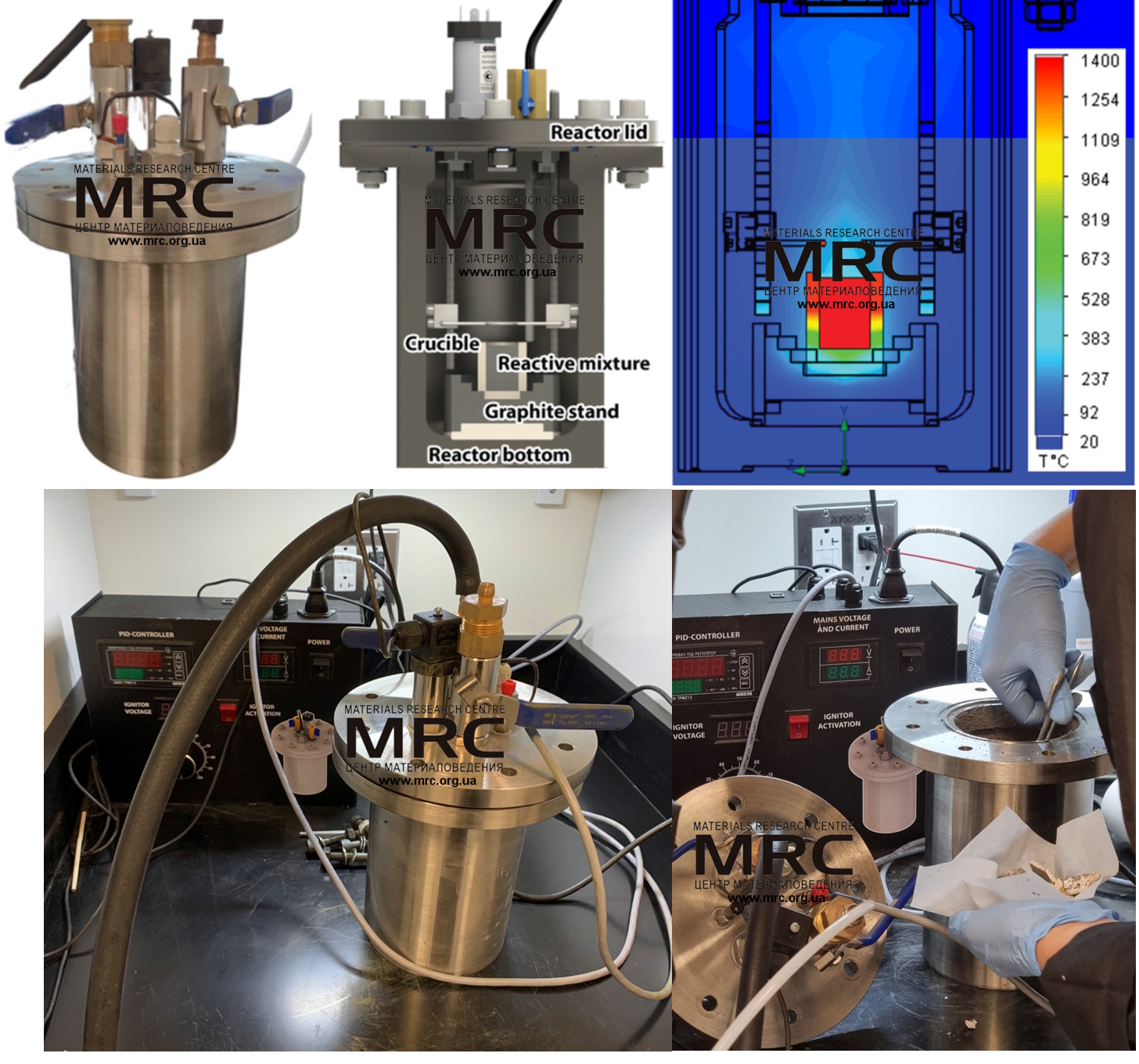
Our partners from MRC (Kiev, Ukraine) design and manufacture customized laboratory reactors for Self-Propagating High-Temperature Synthesis
Self-Propagating High-Temperature Synthesis (SHS), also known as combustion or autoignition synthesis, creates materials by starting an exothermic reaction among powdered reactants. It stands out for being self-sustaining—generated heat continues the synthesis without needing an external heat source. SHS is widely used in making various materials like ceramics, intermetallic compounds, and composites.
The design of a reactor for Self-Propagating High-Temperature Synthesis (SHS) is a critical aspect of ensuring the success and safety of the process. The reactor must be able to initiate and sustain the exothermic reaction while allowing for control over key parameters.
We provide development of SHS technologies, design and manufacturing of customized specialized equipment intended for synthesis of novel materials using non-critical raw materials as a precursor for SHS technology.
SHS reactor and its thermal model: General view of the SHS reactor; Cross-section of the reactor; Thermal model of the SHS reactor with 60 g of the reaction mixture showing the temperature field in the reactor during the combustion synthesis.
Vorotilo, S., Shuck, C.E., Anayee, M. et al. Affordable combustion synthesis of V2AlC precursor for V2CTx MXene. Graphene and 2D mater 8, 93–105 (2023). https://doi.org/10.1007/s41127-023-00059-1
For orders please contact us at sales@carbon.org.ua
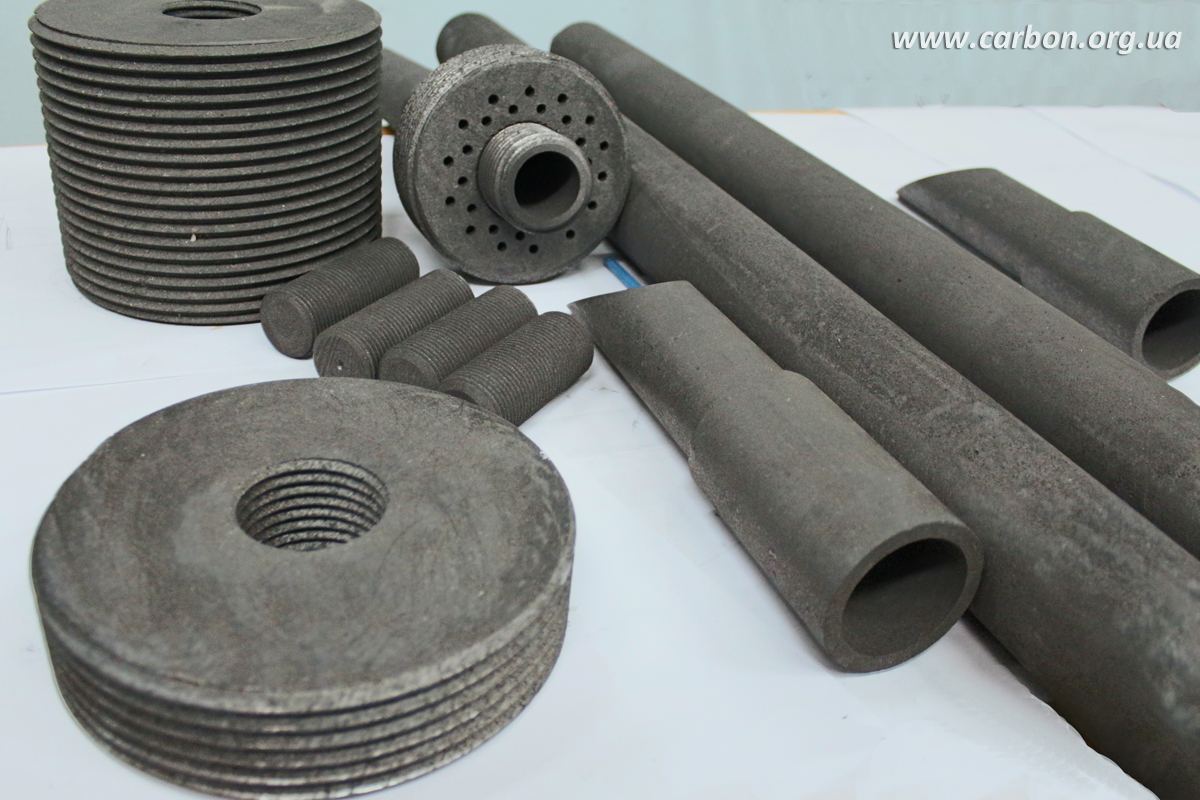
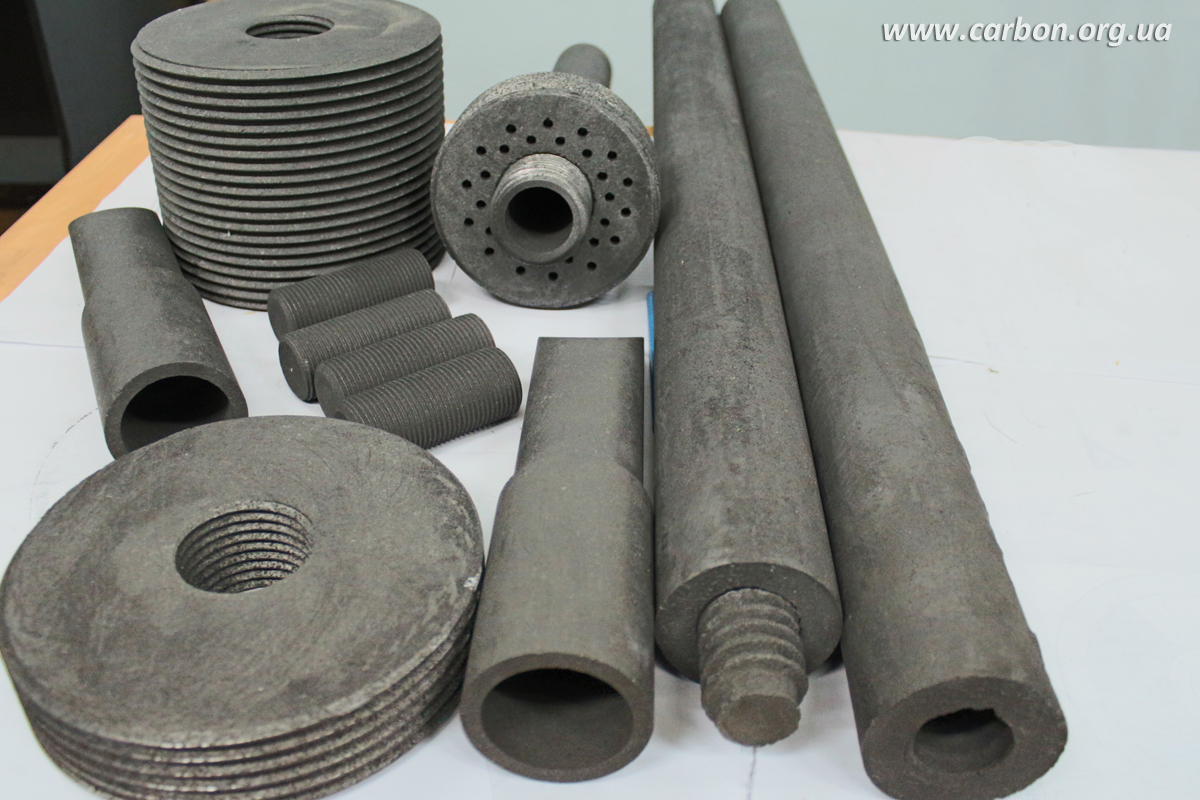
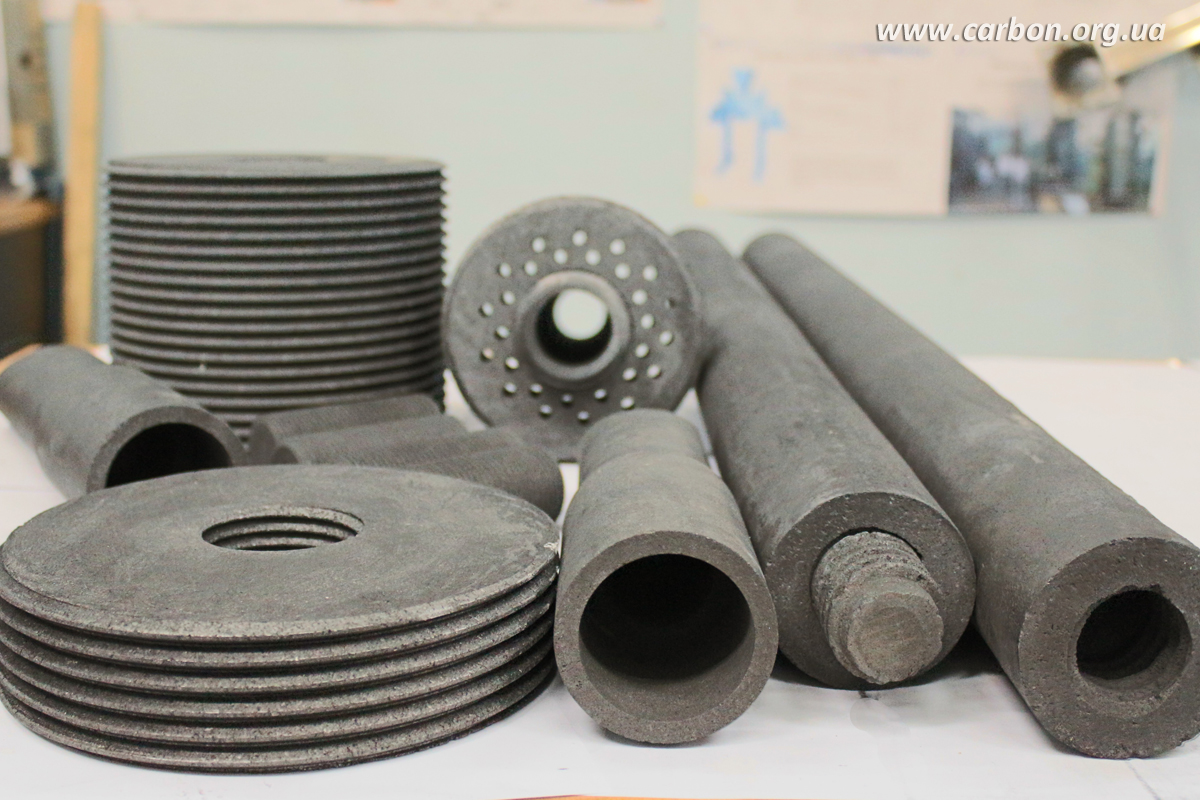
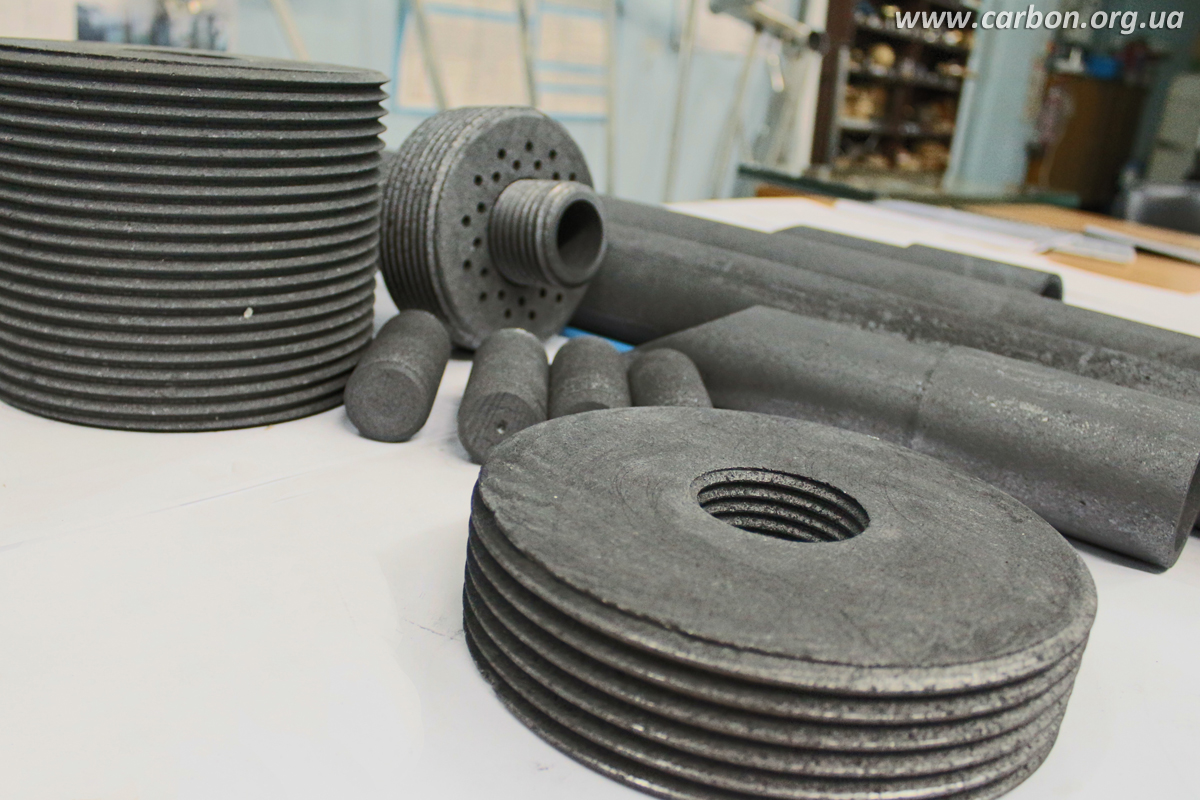
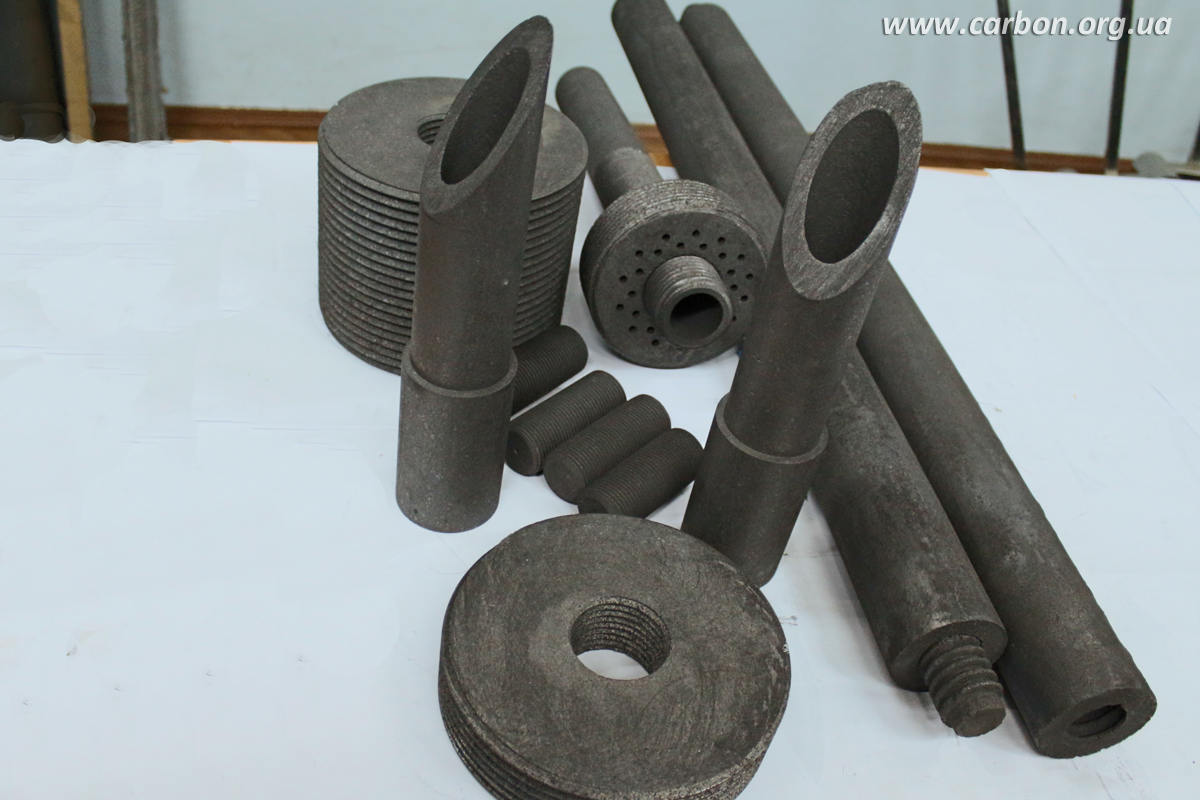
Manufacturing of Carbon Graphite Products
We provide design, engineering works and technological development of graphite products according to any requirements of the customer. If you have any questions, please, contact us at sales@carbon.org.ua.
Mills for Nanopowders
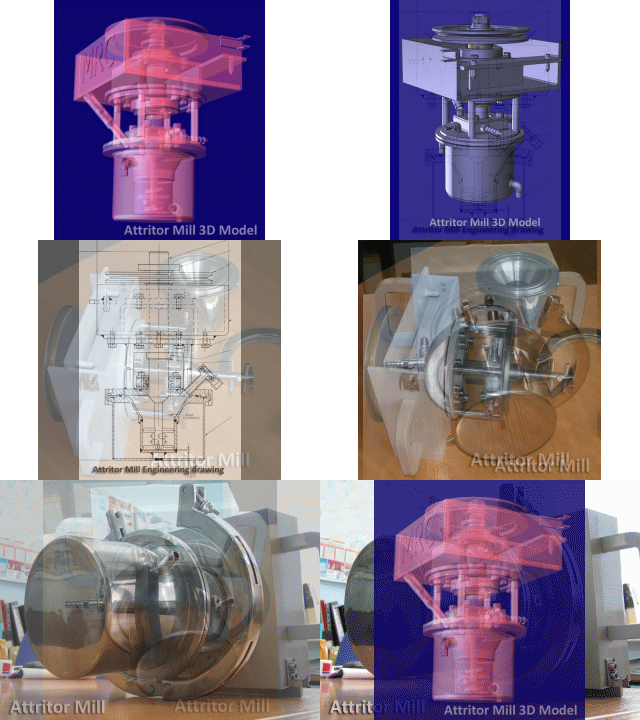
Attrition mills are more appropriate for mid-range size particles. Such millsutilize 3-10mm media to produce material ranging in size from approximately 1 to 10 microns.
Attrition milling is simple and effective. Feed material is placed in a stationary tank with the grinding media.
A rotating shaft with arms or discs then agitates the material and media. Both impact and shearing action result in size reduction as well as homogenous particle dispersion with very little wear on the tank walls. These efficient forces must be present for the most effective grinding action.
Manufacturing of Custom Furnaces
Manufacturing of Custom Furnaces
We provide design, development and manufacturing of special laboratory and technological furnaces.
Our company have experience in manufacturing wide range of custom laboratory furnaces with special parameters for chemical analysis, analytical works with different types of heat treatment, and laboratory technological lines for specific carbons manufacturing.
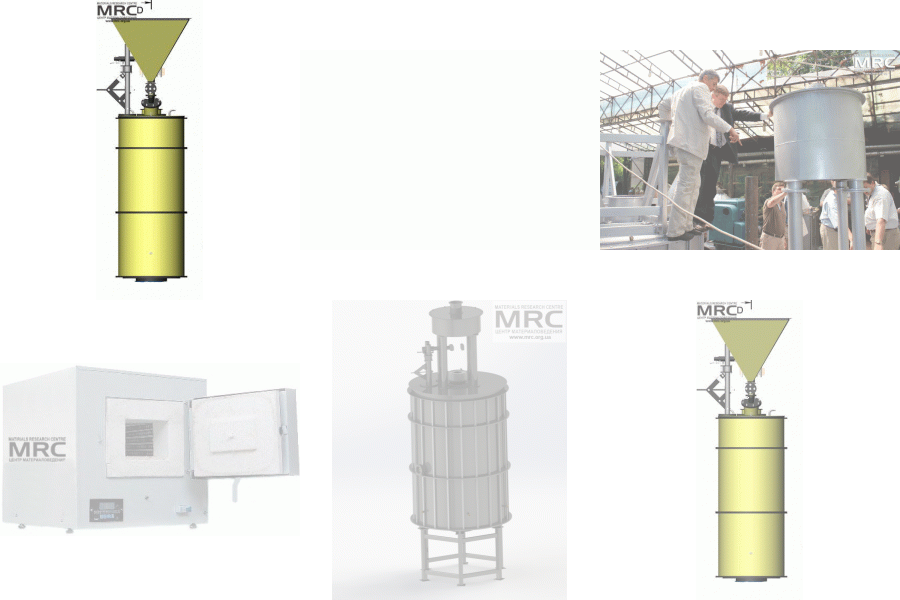
Laboratory and Technological Lines
Manufacturing of Laboratory and Technological Lines
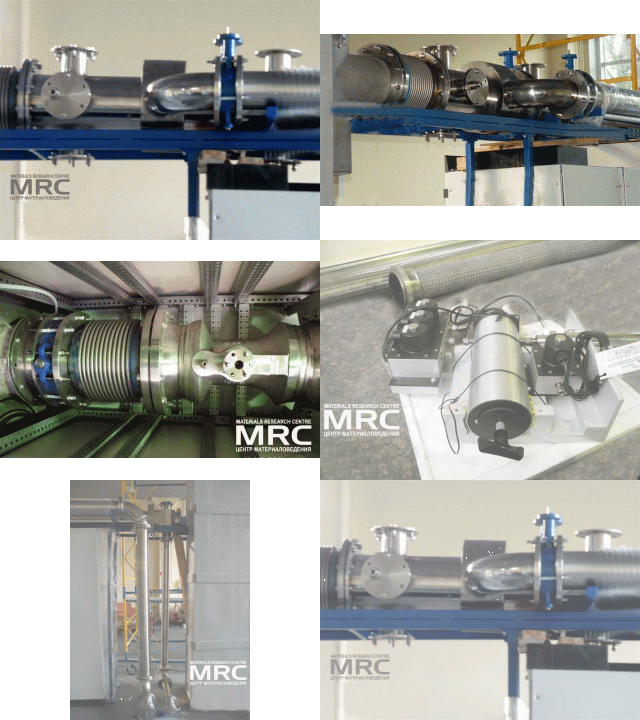
Our engineers can develop and manufacture custom experimental laboratory and technological lines for different purposes.
We provide design, engineering works and technological development of equipment according to any requirements of the customer.
If you have any questions, please, contact us at sales@carbon.org.ua.