
SupercapU
SupercapU is a family of carbon based electrodes for use in batteries, supercapacitors (also known as ultracapacitor) and capacitive desalination (also known as capacitive deionization).
Our products are made using advanced superior-grade activated carbon. Our exceptional control over carbon properties combined with our electrode manufacturing capabilities allows superior performance of the device.
SupercapU can be made in nanoparticle form as well as more conventional micron-sized powders. For applications support or more detailed information on specific applications, please email sales@carbon.org.ua or call us at +380442332443.

Metal air batteries
SupercapU carbon materials are available specifically optimized for high performance in metal-air battery applications.
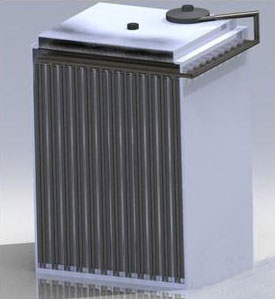 While metal-air batteries are an established technology, their use has historically been confined to low-rate applications due to limitations in available cathode materials and material supports.
SupercapU offers improved performance in metal-air batteries by reducing the carbon particle size down to nanometers, while maintaining high specific surface area. When micron-sized particles with only micropores are used, only a small fraction of the particle near the surface has high rate capability.
With hierarchical pore size distributions, more surface area has high rate capability, but there are still many regions which do not have high rate capability.
However, virtually all of the particle has high rate capability when the particle size is reduced to tens of nanometers, reducing the distance which oxygen must diffuse within the particles.
Capacitive desalination
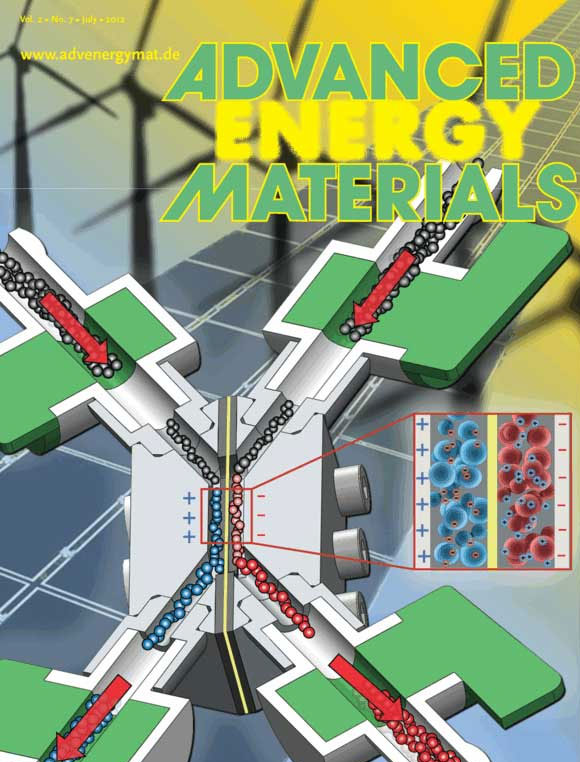 SupercapU offers improved performance in capacitive desalination over conventional activated carbons, owing to its higher salt sorption capacity during operation.
Capacitive desalination (also known as capacitive deionization and flow through capacitor) is a desalination technique which is attracting increasing interest, owing to its lower energy consumption than conventional desalination techniques.
Systems using capacitive desalination can also be made more robust and, potentially, at lower capital cost than membrane-based methods used today, such as reverse osmosis and electrodialysis.
The operation of a capacitive desalination unit is shown in the figure to the right. During operation, water flows through the device, which has two porous carbon electrodes held at a voltage, and ions are attracted to oppositely charged electrodes. This removes the ions from the solution, creating purified water. When the electrodes are saturated, the potential can be released, allowing the ions to be released into a concentrated solution.
Supercapacitors
Supercapacitor’s energy density is maximized when the pore size of the carbon material matches the size of the ions within the supercapacitor electrolyte. Because of the narrow pore size distribution of our electrode materials combined with a high surface area, we can offer high-performance materials optimized for different electrolyte system of interest. In addition, SupercapU can be produced with high bulk density (around 0.7 g/cc in electrode sheet form), enhancing device energy density. SupercapU is also available in high purity (<0.5% ash) for good cyclability.